The moment the second episode stops
You were two episodes in. The format does what good vertical video does: quick cuts, a look held a beat longer than it needs to be, writing that does just enough. By the close of the second one, something is plainly about to happen. Then the next card refuses to play. A padlock sits where the thumbnail should be, and a box appears asking you to register.
The feeling that follows is specific, and worth naming, because it is what drove the search you typed afterwards. It is not disappointment with what you watched. It is the suspicion that you were worked: that the suggestion was the entire product, that no later episode goes anywhere, that this is a shop window with an empty room behind it.
That reading is fair on the evidence you had. It is also wrong.
Two different questions, one word doing both jobs
Someone searching for an uncensored version is almost always asking two things at once without pulling them apart. The first is about the picture: has something been hidden, obscured, cut away before it landed. The second is about the till: can I reach the part I want without paying.
The answers run in opposite directions, which is why the single word sends people hunting in the wrong place. Nothing is hidden. A great deal is behind a paywall. Hear only the first answer and you will lose an hour convinced a fuller edit exists on another domain. Hear only the second and you will assume the material is paid and sanitised both.
Nothing in the frame is being kept from you
No blur. No black bar, no conveniently placed lamp, no drop in the audio. There is also no longer cut sitting in a vault somewhere. The two episodes you watched for nothing are not tidied-up versions of something that exists elsewhere in a rawer state. They are chapters one and two, written from the start to hold back.
If you have spent time on platforms that genuinely do censor, that distinction is worth a second. Here the restraint lives in the script rather than in post-production. Nothing was sanded down after the fact.
The line falls between episode two and episode three
Every series in the public catalogue runs to five episodes. The opening two cost nothing and stay safe for work in the literal sense: loaded premises, charged dialogue, nothing explicit shown. From the third onward the series turns adult, and those three are the ones you pay for.
So the boundary is a price list, not a policy. Candy AI tags the opening two episodes at zero and each of the remaining three at thirty tokens, flagging those three premium. Nothing has been trimmed on either side of that line. The free pair is where a story begins and the paid three are where it goes, and the only thing dividing them is a number attached to each file.
How far it goes depends entirely on which series you opened
The other thing that one flat word flattens is variation. The paid stretch does not land in the same place across the catalogue. Some series carry the tone of the opening two forward and let tension do the work; others move well past it from the third episode on.
So this site rates every series from one to five for how explicit the paid episodes become. The genuinely useful question was never whether Candy Shorts is uncensored; it is how far this particular series travels, and whether that is the register you wanted. Five of them make the case better than another paragraph of theory.
The two series where the woman on screen is a real person
Almost everything in the catalogue depicts nobody at all: the characters are invented and the faces are generated, which is worth knowing before you form an opinion about what you are watching. Two of the strongest series are the exception, and the exception has a clear shape: a working adult performer licensed her likeness and agreed to the arrangement, and the footage itself is still generated.
My Wife's Best Friend is built around Riley Reid. The setup is domestic and a little cruel. Your wife's closest friend, who used to do this for a living, moves into the house, and she reads you rather faster than you would like. It sits at the top of our scale, five out of five once the paid episodes begin. If you want to know whether this format can deliver rather than merely promise, this is the honest test.
Student Bodies belongs to Bonnie Blue, and it plays her public persona straight rather than softening it: she lands on campus with one day, a record to chase, an audience watching her stream it, and a nervous volunteer holding the camera. We rate it three of five, lower than the premise leads people to expect, because much of the running time goes on the build, the broadcast and the crowd. If you are there for the character and the spectacle, that is the appeal. If you came for intensity alone, either of the two Riley Reid series is the better use of the money.
Three from the stepfamily shelf, where the catalogue is deepest
The stepfamily premise is the most crowded corner of Candy Shorts, and crowded corners are where the writing has had to get sharper to stand out. These three are where it has. No real person appears in any of them.
Date With My Stepmom opens on an ordinary small humiliation. Nina's husband cancels their dinner at the last minute and she is left in the house with his twenty-year-old son, dressed for an evening that is no longer happening. The series frames what follows as revenge rather than seduction, which gives the writing somewhere to go. Four out of five.
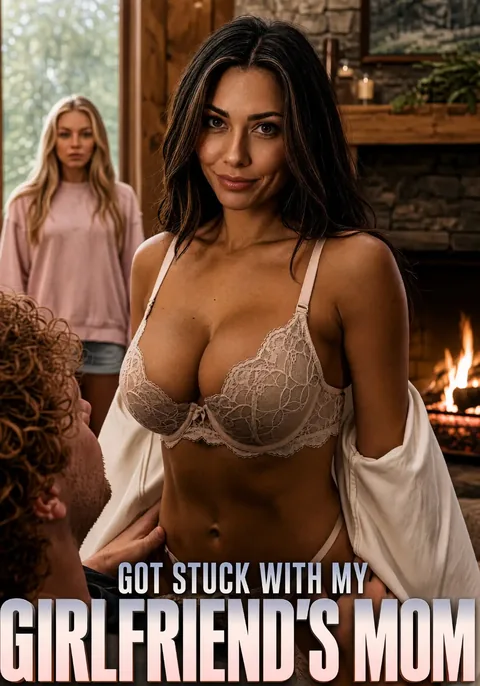
Got Stuck With My Girlfriend's Stepmom is the claustrophobic one. A boyfriend cannot leave the house, and the stepmother decides to establish exactly how loyal he is to her daughter, turning the next few hours into an examination he never agreed to sit. Four of five, and the free pair is doing real work here: of everything on this page, this is the series where the second episode ending lands hardest.
My Stepsister Thinks I'm Pathetic earns its title inside the first minute. She is an influencer, she is openly contemptuous, and the arrangement inverts the moment she needs someone to hold her camera and stops performing for it. Four of five as well, and the funniest of the three, which is not a category people expect to matter until they have watched a few.
What is actually waiting when you go looking elsewhere
At some point most people open a second tab and search for a download, a mirror, a leak, an uncensored archive. It is worth knowing what sits at the other end, because it is remarkably consistent.
One: generated clips with no connection to the series, relabelled with its title. Two: the same two free episodes you have already seen, reposted by someone betting you will not recognise them. Three: a page that wants an email address, a card number or a completed survey first, and then shows you nothing.
The reason it is always one of those three is structural rather than bad luck. These episodes were never handed out as files. They live inside Candy AI and nowhere else, so no leaked copy is in circulation and no outsider holds a version with more in it than the platform sells. Whatever that tab is offering, it is not what sent you looking.
Working out whether the back half is worth it to you
Treat the free pair as an accurate sample of one thing and a misleading sample of another. They tell you honestly how a series is written, paced, cast and shot. They tell you nothing about how far it goes, because they were built not to.
That makes the decision simpler than it feels. If the craft of those opening episodes held you, the paid three are the same thing with the restraint taken out. If it did not, if only the promise kept you in the feed, the explicit episodes will not repair that. And if you carry on, choose by rating rather than by cover art.
No figure in money appears on this site. What a token is worth is Candy AI’s to change, and the shape is the part that holds: thirty tokens an episode for the last three.