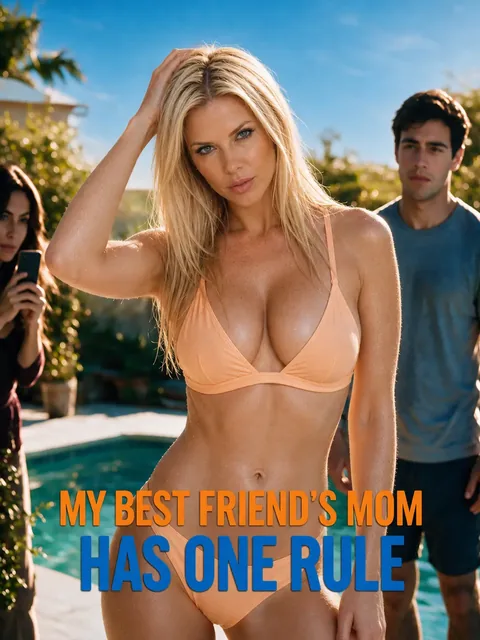
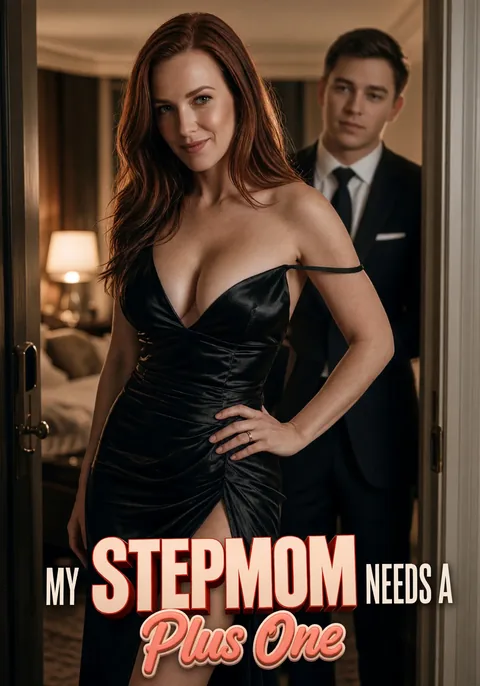
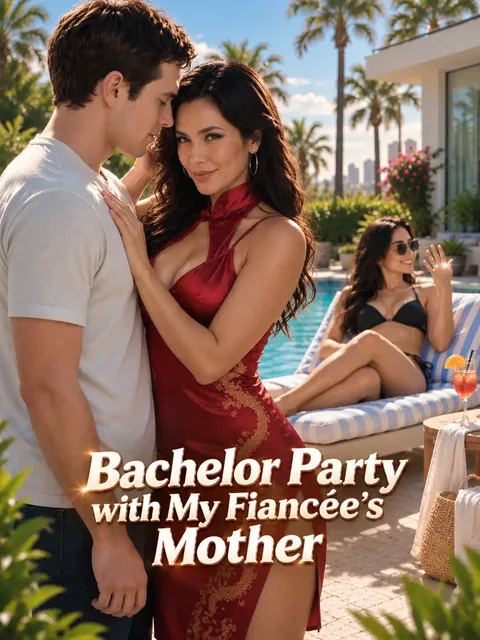
The thing you notice on the third series
You probably did not arrive intending to spend anything. Something in the feed held you longer than it should have, a padlock asked for an account, the account cost nothing, and twenty minutes later you were back in the catalogue with the next episode refusing to play.
So you opened a different series, half to see whether the same thing would happen. Two episodes played. You tried a third title. Two more.
That is the real shape of the free tier, and it changes what a free account is worth. The allowance belongs to the series, not to you. Nothing is deducted from a balance, no counter runs down in your account.
Two of five, and always the same two
A series in the public catalogue is five episodes long, end to end. The opening two cost nothing. Three, four and five are paid. That ratio holds from title to title, and the cut never lands anywhere else: whatever a series is about and whoever is in it, the wall arrives in the same place.
No series hands out a third opener, and no sequence of taps moves the boundary by one. Once that number is in your head the catalogue becomes readable: a long shelf of free openings, each with the same three-episode remainder behind it.
Why the free half shows you nothing
Episode one and episode two are safe for work. Suggestive, often strongly so, but nothing explicit happens in them, and that holds catalogue-wide rather than for whichever series you happened to pick.
This is where people quietly feel conned, and the feeling deserves a straight answer rather than a shrug. You were not served a softened edit. Your account is not on a cautious default, your country is not getting a trimmed version, and you did not have the bad luck to land on the one restrained title. The two episodes anybody can watch were built to stop short. There was nothing in them to cut.
Which means the paywall and the content line are a single line, drawn once: the free part ends exactly where the adult part starts, and that is why episode three feels less like an instalment than a door.
What two episodes are honestly enough to judge
Here is the useful half of the arithmetic. The free pair is the genuine opening of the series rather than a trailer cut from the best moments, so it tells you nearly everything about the craft.
You can hear whether the voice work has timing and weight or whether every line arrives at the same flat pitch. You can see whether faces hold together between shots or drift the way generated video does. You can read the writing: whether the premise has somewhere to go, whether the pacing suits a portrait screen and a thumb.
And by the end of the second episode you can tell whether it is the story keeping you there or only the promise of what comes next. That distinction is worth a moment before you pay for anything.
What two episodes cannot tell you
They cannot tell you how far the paid three go, and pretending otherwise would be the easiest lie here.
How explicit a series becomes varies from title to title, sometimes sharply, and the opening pair signals none of it. A restrained start can precede the most direct run in the catalogue; a loud synopsis can lead somewhere tamer than its wording suggests. The whole free stretch is mild by design, so there is no gradient to extrapolate from.
That gap is why this site scores every series from one to five, applied to the paid episodes alone. A one stays close in register to what you already watched. A five stays explicit for the rest of the run and never looks away. Candy AI publishes nothing of the sort before you press play, so the order has always been pay first, find out second.
The padlock, and a phrase from their own code
The arrangement is written into Candy AI’s own markup rather than into its marketing, and the markup is the more exact of the two. Every episode carries a token price. On every series in the catalogue the first two are set to zero and the three after them are thirty each, flagged premium. Free is therefore a precise description and not a promotional one: two episodes at no cost, on every series, with the meter starting at the third.
Read that plainly and it is oddly reassuring. The free episodes are a funnel: the start of a series handed over so the remainder can be sold, which also means nobody had a reason to weaken them. They are not a demo build but episodes one and two, whole, doing marketing as a side effect of being the actual show.
Riley Reid, Bonnie Blue, and what licensing means
All of it is generated. Six titles carry a creator credit: Bonnie Blue for Student Bodies, Riley Reid for My Wife’s Best Friend, My Stepmom’s Weekend and My Step-Sister’s Dormitory, Sophie Dee for Under Her Watch and Mia Malkova for Private Lessons. That credit gets read wrongly in both directions, so it is worth being exact about. A working creator agreed to the use of her face and her name and is named for it; every frame is still machine-made, and nobody stood in front of a camera. On the other forty-eight titles no real person appears on screen at all.
My Wife’s Best Friend is one of two Riley Reid titles and sits among the series we score a 5. The setup is domestic and faintly cruel. Your wife’s oldest friend, whose career was in adult film, moves in, and inside an evening she has read you more accurately than your wife has in years. The free pair is almost entirely that reading, and it is the best-acted opening we have watched anywhere in the catalogue. Anyone wondering whether the format can pay off rather than just tease should spend a free evening on this one.
Student Bodies belongs to Bonnie Blue and plays her public persona dead straight: one day on a campus, a record attempt, a stream running for her audience, and an anxious volunteer behind the camera. We score it 3, lower than the premise leads anyone to expect, and the gap is instructive. A synopsis can shout while the episodes spend most of their length on build, crowd and broadcast. The free pair here is setup and nerve, and the one holding the camera is the character to watch.
Three stepfamily series, and what their free halves are doing
Stepfamily setups fill more of the catalogue than anything else, and a crowded shelf tends to be good for writing, because a title has to do something to get noticed. These three did. None of the three depicts a real person: every character is invented, every face generated. We score all three a 4.
Date With My Stepmom begins with a small, ordinary humiliation rather than a seduction. Nina’s husband calls off their dinner at the last minute and leaves her in the house, dressed for an evening that is not going to happen, with his twenty-year-old son. The series frames what follows as revenge, which gives the free pair something to be about: two episodes of a woman arriving at a decision.
Got Stuck With My Girlfriend’s Stepmom keeps two people in one house and never lets the air back in. He cannot leave. She has decided to establish how loyal he really is to her daughter, and turns the afternoon into a test he never agreed to take. The tension there is structural rather than physical, which is why it holds up with nothing on show, and why the free half here is the best-built on this page.
My Stepsister Thinks I’m Pathetic tells you what it is within a minute of starting. She is an influencer, he is furniture to her, and the contempt is performed in public. Then she needs somebody to hold her camera, and the performance quietly stops being one. It is the funniest free pair of the five, and nobody opens an app like this one hoping to laugh, which is roughly why it lands.
Spending the free pair without wasting it
Open three series rather than finishing one: breadth is what costs nothing here, depth is what costs money. Watch both before forming an opinion: the first is mostly scene-setting, and the second is where the writing shows its hand.
Then ask the question in its useful form. Not whether you want more, since the format is engineered so that you will, but whether the writing and the performances earned it, and check our rating for where the paid three actually travel.
One thing to save you a search: there is no fourth free episode anywhere. No archive holds the paid ones, because they have never existed outside Candy AI. The pages promising otherwise are after something that is not money, usually a password you also use elsewhere.