Why this one is at the top of the grid
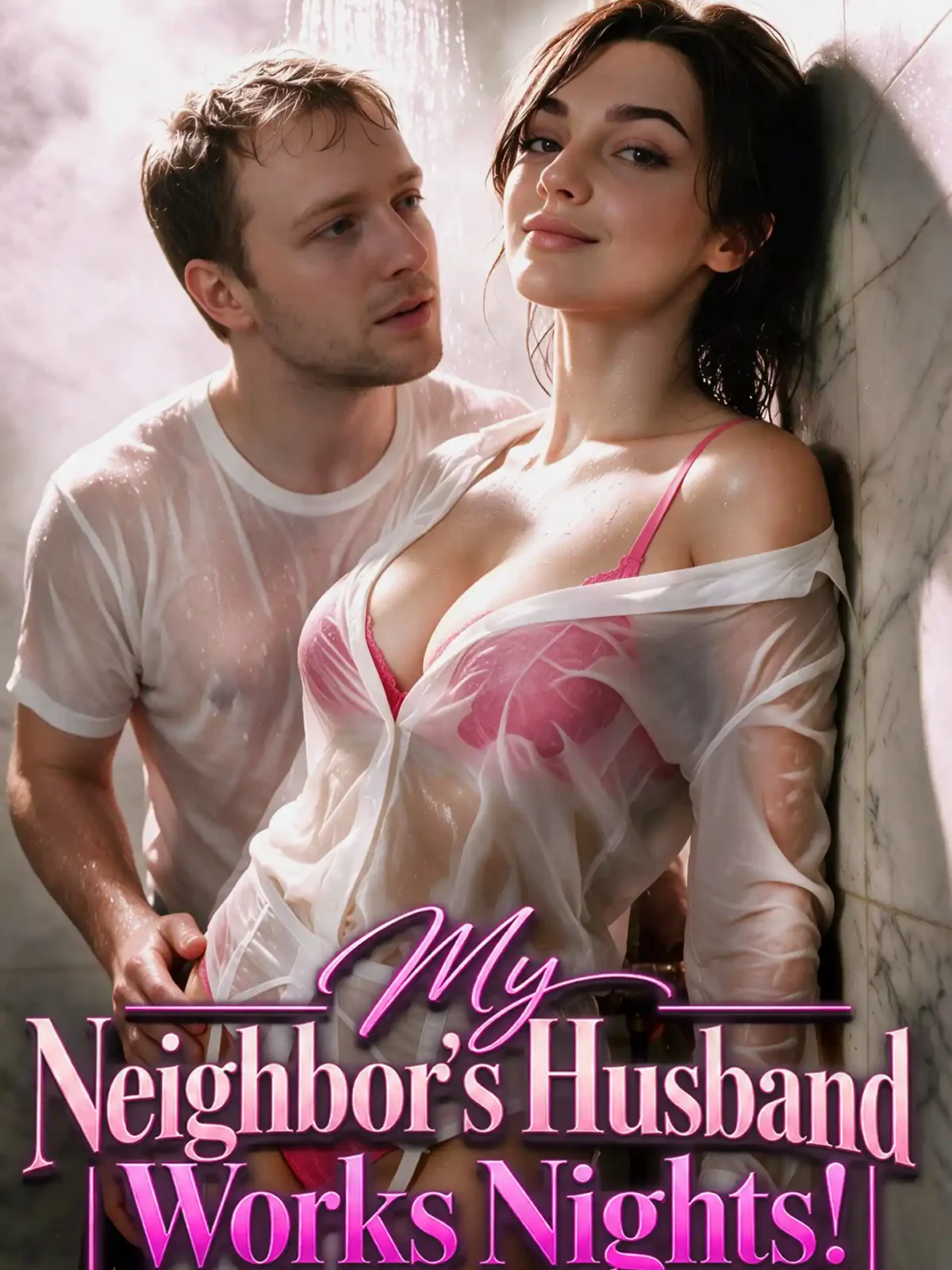
New arrivals get a badge and the first row, and for about a week that badge does most of the work. It is worth knowing that the position is chronological rather than editorial: it means recent, not best. Plenty of people open the top-left tile because it is the top-left tile, watch two episodes, and never find out whether the thing they picked was any good compared with the forty-odd titles sitting underneath it.
So the useful question is not whether this series is new. It is whether the premise it runs on does anything the catalogue has not already done several times over. On that, the answer is more interesting than the cover art suggests.
The premise, stripped of the capital letters
You have just moved in. The woman across the hall knocks at three in the morning because something in her flat is broken, and then something else is broken the following night, and the night after that. She is married. Her husband works nights, which is the whole engine of the thing: the hours when she is alone are the hours when you are awake and one door away.
Candy’s own blurb for it is written in shouting capitals and gets to the point in about nine words. The series itself is slower than its marketing, which is a pattern worth noticing across this catalogue: the blurb is written for the grid, the episodes are written for whoever actually pressed play.
What gives this one its shape is that the excuse is transparent to both people from roughly the second visit. Nothing in the flat is genuinely broken. She knows you know. You know she knows. The series spends its free half in that specific discomfort, where the pretext survives only because neither of them wants to be the one who drops it.
What the two free episodes actually show
Nothing explicit. That is worth stating flatly, because the cover is doing a lot of work and people arrive expecting the cover. The opening pair is a corridor, a doorway, a woman in the frame for slightly longer than the scene needs, and a conversation that keeps finding reasons not to end.
Episode one is the setup and the first knock. Episode two is the one that matters: the repetition, the growing implausibility of the excuse, and a moment near the end where she says something that cannot be taken back as neighbourly. It stops there. Not mid-sentence, but on the beat immediately before the decision, which is the most commercially useful place a story can stop and is exactly where it stops every time in this format.
If you came from the thumbnail you will find the free half restrained to the point of feeling like a different product. If you came for the situation, it is the better half.
Where it turns, and what that costs
The third episode is where the series becomes explicit adult content, and it is also the first one carrying a price. Candy attaches a token cost to each episode individually: zero on the first two, twelve on each of the last three. Thirty-six tokens takes you to the end.
That number is worth holding on to, because it is not uniform. Six series charge thirty tokens an episode rather than twelve, and those six are exactly the ones carrying a real performer’s licensed likeness. Everything else in the catalogue, this title included, sits at twelve. So the series you are looking at is in the cheaper two-thirds of the catalogue, and finishing it costs less than half what finishing Student Bodies or My Wife’s Best Friend does.
What a token is worth in money is Candy’s to set and to change, which is why no figure in currency appears anywhere on this site. The count is the part that stays put.
Nobody in this one is real
Nothing here was filmed. The whole catalogue works that way, but the distinction is worth drawing carefully on this particular page, because a small group of titles does work differently and this is not among them.
Six titles carry a performer credit, and the arrangement behind each is a licence: Bonnie Blue on one, Riley Reid on three, Sophie Dee and Mia Malkova on one apiece. Those six show a real woman who was asked and said yes, in video that was still assembled rather than recorded. This page has no such credit attached to it. The neighbour exists nowhere outside the series.
If that distinction matters to you in either direction, it is the first thing to check on any series in this catalogue, and it is not always obvious from the page.
Who this suits, and who should pick something else
This one suits you if the appeal is proximity and a bad idea forming slowly. The corridor does a lot of work. The story is small, domestic and almost entirely two people, and it does not clutter itself with a third party or a plot twist.
Pick something else if you want a face you recognise, in which case the six licensed titles are the ones to look at, at thirty tokens an episode. Pick something else if you want a household with pressure on it rather than a single closed door, in which case the stepmother and stepsister end of the catalogue is doing a different and busier thing. And pick something else if the free half has to deliver on its own, because here it very deliberately does not.
We score the paid stretch a 4 out of 5 for how explicit it gets. That is our number, not Candy’s, and it describes the last three episodes rather than the two you can watch for nothing.
There is nothing to find elsewhere
Searches for leaked or downloadable episodes of this series come back with results, and none of those results are episodes. The files exist inside Candy AI and nowhere else, and the paid ones are openly on sale rather than withheld, which makes a leak both technically pointless and commercially unnecessary.
What those pages actually want is a sign-up, a card, or a download that is not a video. A series that costs thirty-six tokens to finish is a poor reason to hand any of that to a stranger.
The honest summary
A competent and unusually restrained entry in a catalogue that is not generally restrained. What you get for nothing is better written than the cover implies and shows none of what the cover implies. What you pay for is where the title stops being a tease, and at twelve tokens a go this is one of the cheaper ways to find out whether the format suits you.
If you have not spent anything on Candy Shorts yet and you want a low-cost first test of the format, this is a defensible place to run it.